I’m Chris, a CTO who connects product thinking, system design, and hands-on development to build applications with RAG and agentic AI—grounded in knowledge, orchestrated to get useful work done.
That means connecting what’s documented with what people know—and capturing the expertise that hasn’t been written down yet.
RAG workflow: existing documentation and unwritten expertise captured as notes, audio, or video become the sources. These sources are extracted, transcribed, chunked, and embedded into a scoped knowledge index. At query time, agentic orchestration can plan queries, coordinate retrieval tools, and refine weak evidence. Relevant evidence is retrieved and reranked, then supplied with the question to a language model. The model generates an answer with source citations. This diagram shows knowledge grounding and coordination, not permission to change hardware.
Knowledge, connected.
01 BUILD THE KNOWLEDGE
Documents Audio Video
Existing documentation + recorded expertise
Extract · transcribe · chunk · embed
Searchable knowledge
Embeddings + a scoped vector index
02 ANSWER THE QUESTION
Your question
Retrieve + rerank
Relevant evidence
Question + retrieved context
Generate with context
The LLM composes from the evidence.
LLM
A useful answer.
With citations back to the sources.
[1]
AGENTIC ORCHESTRATION
Plan queries · coordinate tools · refine retrieval
GROUNDED IN EVIDENCE. COORDINATED BY AI.
THE WORKFLOW
Capture knowledge. Ground the answer. Orchestrate the work—with people in control.
A knowledge engine, an event-and-media platform, and a hardware assistant. RAG supplies the context; AI workflows and agentic orchestration connect it to useful work—with people in control.
A multi-tenant RAG platform that makes existing documentation and newly captured expertise searchable through documents, audio, and video—with answers grounded in their sources.
Multimodal RAGAgentic retrievalAPIs & SDK
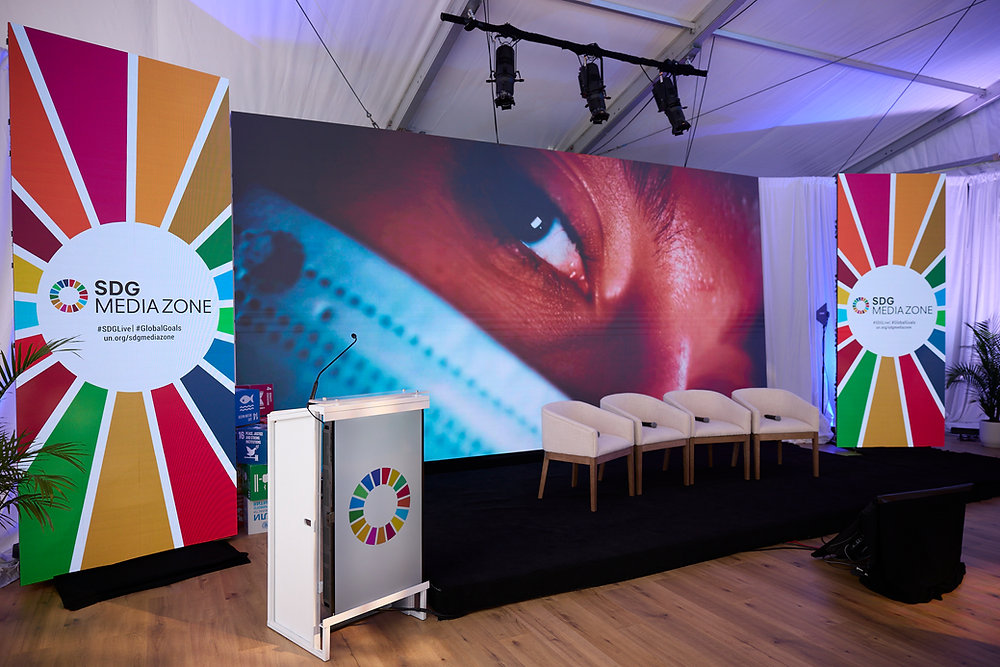
SDGMEDIA ZONE
EVENTS · SESSIONS · SPEAKERS
An event ends. Its ideas keep moving.
Search what was said on stage
EDITOR-CURATED · EVENT-PUBLISHED
POWERED BY RAGILLUSTRATIVE VIEW
02 THE EVENT-TO-KNOWLEDGE EXPERIENCE
SDG Media Zone↗
The event ends. The knowledge keeps working.
A RAG-connected event and video platform that helps audiences discover what was said on stage—and gives editorial teams control over how that knowledge is published.
Semantic momentsAI-assisted publishingEditorial control
Illustration: equipment manuals and best practices feed a RAG-powered assistant’s configuration recommendation. A separate user approval is required before settings on the video processor are changed. The illustrated rack-mounted processor is generic and this portfolio is not connected to hardware.
RAG / KNOWLEDGE → ACTION
Advice is not authorization.
Equipment manuals
Best practices
How should I configure it?
Configuration recommendation
Informed by your equipment
User approval required
ONLY AFTER APPROVAL
VIDEO PROCESSOR
Approved settings
No approval. No hardware changes.
03 THE APPROVAL-GATED ACTION LAYER
Hardware Configuration Assistant↗
From technical knowledge to approved action.
An assistant connected to the RAG platform that uses equipment documentation and best practices to guide a natural-language conversation, recommend video-processor configurations, and change hardware settings only after user approval.
Capture knowledge. Ground decisions. Orchestrate work. The RAG platform combines source-grounded retrieval with AI query planning. SDG Media Zone turns media knowledge into event discovery, semantic moments, and AI-assisted editorial work. The hardware solution connects recommendations to action—but only with user approval.
I’m interested in the full journey—not just the model. A good application begins with the right problem and ends with something people can depend on.
↳
The technology is the means. The working product is the point.
01
PRODUCT STRATEGY & DISCOVERY
Plan the right problem.
Start with the operational need. Map the people, existing sources, and the expertise that hasn’t been documented. Plan how to capture that know-how alongside the constraints and decisions the application should support.
02
EXPERIENCE & ARCHITECTURE
Design the whole system.
Connect the user journey to RAG and agentic orchestration. Define the tools, evidence quality, access boundaries, and approval points—and choose where model-assisted planning or a deterministic workflow is the right fit.
03
IMPLEMENTATION & OPERATIONS
Build beyond the demo.
Initiate the delivery, develop the application end to end, and account for the things that keep it usable: security, background work, monitoring, and deployment.
BEYOND THE DOCUMENTATION
Not all your knowledge is in the manual.
Existing documentation is a powerful starting point. But the practical details often live with one person: how to handle an exception, why a setting matters, or what to do when the standard procedure falls short.
This is tribal knowledge, or tacit expertise. Capturing it turns unpublished experience into a source the application can use—not something the next person has to rediscover.
↳
Don’t just search what’s written. Capture what’s known.
01
Capture the know-how.
Record an expert interview, narrate a hands-on walkthrough, or write down the steps and workarounds that aren’t in the manual.
INTERVIEWS · WALKTHROUGHS · NOTES
02
Keep the context.
Document why a decision works, when it doesn’t, and which exceptions matter. Review the captured material with the contributor before relying on it.
DECISIONS · EXCEPTIONS · EXPERIENCE
03
Make it reusable.
Bring those notes and recordings into the platform alongside existing documentation. Transcription and retrieval make the expertise available to the application—and the wider team.
CAPTURED KNOWLEDGE → USEFUL APPLICATIONS
The goal is richer, relevant knowledge—not simply more data. It must be captured first; RAG cannot retrieve what has never been recorded.
A FIELD NOTE ON HOW IT WORKS
A useful answer starts long before the prompt.
RAG connects AI to a defined collection of knowledge. Agentic orchestration builds on that grounding to plan queries, coordinate tools, and refine the evidence used in a response.
THE ORCHESTRATION LAYER
RAG grounds the answer. Agentic AI coordinates the work.
Retrieval supplies the relevant knowledge. Agentic orchestration uses model-assisted planning and tools to coordinate the steps needed to reach a useful result—not just produce a reply.
01
Plan & clarify
Break a question into focused queries—or ask a follow-up when the request is ambiguous.
02
Coordinate tools
Search the relevant knowledge sources, combine the results, and rerank the evidence.
03
Refine the evidence
When retrieval is weak, use a repair pass before composing a source-grounded response.
Orchestration is not blanket permission. The hardware assistant can recommend a configuration, but changes settings only after user approval. In SDG Media Zone, AI helps prepare content; editors decide what becomes public by adding videos to events.
Agentic where planning and adaptation help. Deterministic where a predictable workflow is better. Human approval where hardware changes are involved.
01 / BUILD THE KNOWLEDGEBackground ingestion
Bring in the sources
Existing documents + captured notes, interviews, and walkthroughs
Extract & enrich
Chunk text, transcribe media, add visual context
Index the knowledge
Scoped text and video vector indexes
Source evidence, ready for retrieval
02 / ANSWER THE QUESTIONAt query time
Understand the question
Normalize, clarify, and plan queries
Retrieve & rerank
Find, deduplicate, refine, and repair
Answer with evidence
Stream a response with citations and clips
ONE KNOWLEDGE LAYER
Web workspaces · SDG Media Zone · Hardware integrations
What matters beyond the diagram?+
The RAG platform’s optional LLM query planner can generate 1–4 sub-queries or ask for clarification instead of searching. Its orchestrator fans queries out with bounded concurrency, reranks results, and can make a repair pass when evidence is weak. This is the adaptive part of the workflow; not every background worker or scheduled AI job is an autonomous agent.
Transcript indexing can happen before asynchronous visual enrichment updates the video records. Audio is searchable through transcription—not a separate audio vector index. Retrieval stays within a tenant’s configured workspace, and citations let people inspect the evidence. These are documented design choices, not a guarantee that AI outputs are always correct.
03 / WHAT I BRING
The connections between the disciplines.
Strategy, architecture, experience, and engineering are not separate handoffs. They’re parts of the same product.
Product & operational thinking
Problem framing, workflow design, knowledge organization, and capturing the unwritten expertise an application needs to be useful.
RAG & agentic architecture
Multimodal ingestion and source-grounded retrieval, combined with model-assisted planning, tool orchestration, and adaptive retrieval within defined boundaries.
End-to-end application development
Thoughtful interfaces, typed APIs, reusable SDKs, public experiences, and hardware integrations that apply changes only after user approval.
Less inaccessible knowledge. More useful possibilities.
/ 01
Expertise that doesn’t stop with one person
Capture unwritten procedures, practical workarounds, and decision context. Make that know-how searchable alongside existing documentation so the wider team—and its applications—can use it.
/ 02
Orchestrated work. Human control.
Coordinate multi-step AI work instead of stopping at a chat response. Keep decisions grounded in evidence, preserve editorial control, and require user approval before changing hardware settings.
/ 03
Infrastructure with more than one use
Connect a reusable RAG foundation to internal workspaces, event-and-media discovery, and approval-gated hardware operations.
These are the workflows the platforms enable—not unverified claims of time saved, revenue generated, or measured business impact.
LET’S BUILD SOMETHING USEFUL
Let’s put knowledge to work.
I connect product direction, technical architecture, and hands-on development to turn organizational knowledge into useful AI applications. Let’s talk about what you’re building.